
understanding your pain
Pain has a purpose.
But not always a simple explanation.
Pain involves a complex relationship between your body, nervous system, and brain. Whether it begins with an injury, develops over time, or continues long after healing, understanding how pain works can help us identify what may be contributing to it — and which approaches to care may be most appropriate.
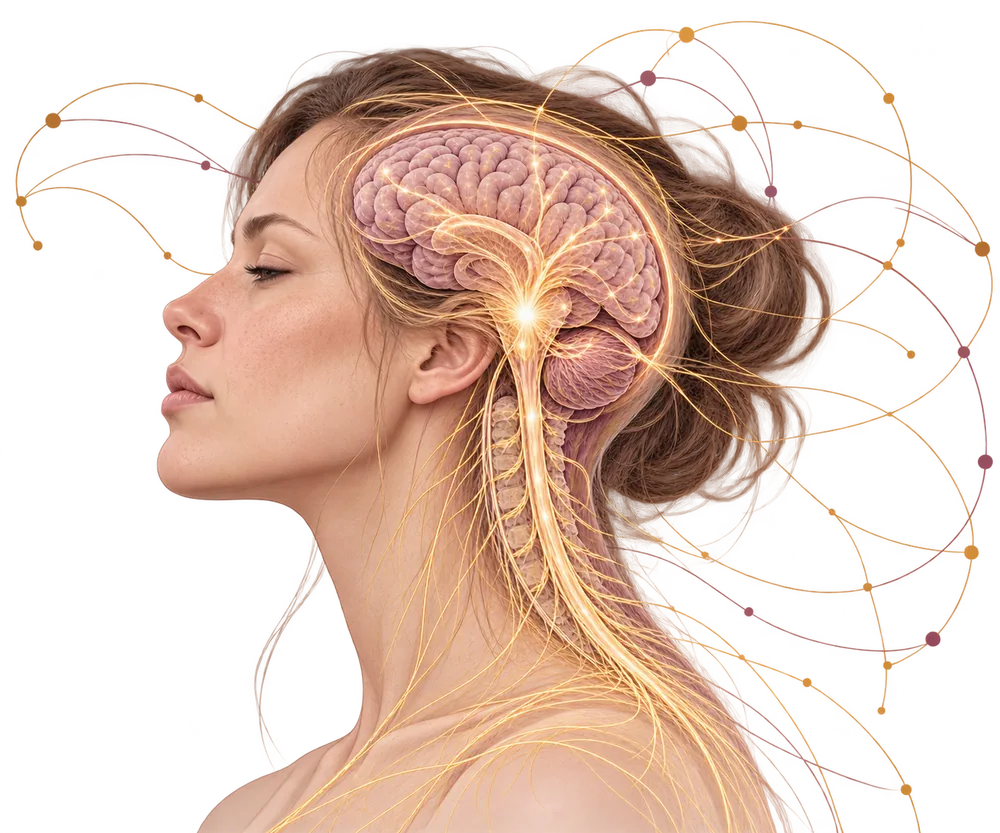
pain biology
Pain is more than a signal
from injured tissue.
Your nervous system is constantly receiving and interpreting information from throughout your body and your surroundings. Pain can be influenced by many kinds of information — not just what's happening in the tissues where you hurt.
01
THE INFORMATION COMING IN
02
THE NERVOUS SYSTEM INTERPRETS
03
THE EXPERIENCE OF PAIN
Nociceptors
Specialized sensory nerve endings detect potentially harmful stimuli, such as extreme temperatures, pressure, or chemicals released during injury and inflammation.
nerve signals
Electrical signals travel through peripheral nerves to the spinal cord, where information is processed and can be transmitted toward the brain.
context & Experiences
Your surroundings, previous experiences, and expectations can influence how your nervous system responds.
stress & Emotional state
Stress, fear, and nervous system arousal can influence pain processing and sensitivity.
Your nervous system doesn't simply measure damage.
It interprets information.
The spinal cord and brain process sensory signals alongside information about your surroundings, past experiences, expectations, and emotional state. Together, these influences help shape whether pain is experienced and how intense it feels.
Pain is a
protective experience.
Pain is your body's way of alerting you that something may be wrong. It can encourage you to protect an injured area while it heals.
But pain isn't a direct measurement of injury. Sometimes we experience pain even when there is no ongoing tissue damage. And sometimes an injury causes surprisingly little pain.
01
THE INFORMATION COMING IN
Nociceptors
Specialized sensory nerve endings detect potentially harmful stimuli, such as extreme temperatures, pressure, or chemicals released during injury and inflammation.
nerve signals
Electrical signals travel through peripheral nerves to the spinal cord, where information is processed and can be transmitted toward the brain.
context & Experiences
Your surroundings, previous experiences, and expectations can influence how your nervous system responds.
stress & Emotional state
Stress, fear, and nervous system arousal can influence pain processing and sensitivity.
02
THE NERVOUS SYSTEM INTERPRETS
Your nervous system doesn't simply measure damage.
It interprets information.
The spinal cord and brain process sensory signals alongside information about your surroundings, past experiences, expectations, and emotional state. Together, these influences help shape whether pain is experienced and how intense it feels.
03
THE EXPERIENCE OF PAIN
Pain is a
protective experience.
Pain is your body's way of alerting you that something may be wrong. It can encourage you to protect an injured area while it heals.
But pain isn't a direct measurement of injury. Sometimes we experience pain even when there is no ongoing tissue damage. And sometimes an injury causes surprisingly little pain.
Acute Pain & Healing
When pain is a signal
to protect.
When tissue is injured, the body begins a coordinated response to protect the affected area and support healing. Nerve signals, inflammation, and changes in sensitivity can all influence the pain we experience.
01 detection
The body detects a potential threat.
Nociceptors detect potentially harmful stimuli, including those associated with tissue injury.
02 protection
The body responds.
Inflammation and temporary increases in sensitivity can help protect an injured area while it recovers.
03 recovery
Healing progresses.
As tissues recover, pain often decreases, although the healing process varies depending on the injury and other contributing factors.
chronic & persistent pain
Why does pain
sometimes continue?
Chronic pain, also called persistent pain, generally refers to pain that lasts or recurs for more than three months. Sometimes this is because an injury hasn't fully healed or an underlying condition continues to produce pain-related signals. Other times, changes in how the nervous system processes information may contribute to ongoing pain. Often, several factors are involved.
Nervous system sensitivity is one factor that can influence persistent pain.
When Sensitivity Increases
The nervous system can become more responsive.
With increased nervous system sensitivity, some sensations may feel more intense or painful than they previously did. This can be influenced by ongoing pain-related input and other biological, psychological, and environmental factors.
When Sensitivity decreases
The nervous system can become less sensitive.
Nervous system sensitivity can also decrease. With appropriate care and changing conditions, some people experience less pain and improved function over time.
neuroplastic pain
The nervous system can learn pain.
It can also learn to respond differently.
Our nervous system is constantly adapting based on our experiences. This ability to change is called neuroplasticity. In some persistent pain conditions, the nervous system can develop learned responses that contribute to pain even when ongoing tissue damage doesn't fully explain the symptoms.
Educational video courtesy of the Association for the Treatment of Neuroplastic Symptoms (ATNS).
The possibility of change matters.
Because the nervous system remains adaptable, approaches that address learned pain responses may help some people experience less pain and improved function.
our approach
Different pain.
Different approaches.
Pain can have any contributing factors, and no single treatment works for everyone. Understanding what may be driving your pain helps guide a more individualized approach — one that considers both physical and nervous system contributors.